With the increasing concern about carbon emissions, many are turning to renewable energy sources such as solar panels to power their homes and reduce their environmental impact. But when were these panels even invented? In this blog post, we’ll take a look at the history of solar panels, from their early beginnings to the advanced technology we see today.
The history of solar panels can be traced back to the mid-1800s when French physicist Edmond Becquerel first discovered the photovoltaic effect. This effect describes how light can be converted into electricity, and was the principle that would form the foundation for future solar panels. However, it wasn’t until 1883 that the first solar cell was created by American inventor Charles Fritts, who coated selenium with a thin layer of gold to make the first functioning solar cell.
In the 1950s, the use of solar cells in space exploration projects became the focus of many scientists and engineers. The first solar panel was developed by Bell Labs in 1954, and was used in a satellite launched by the US government the following year. These early solar panels were only able to convert about 6% of the sunlight they received into energy.
Throughout the 1960s and 1970s, research and development of solar panels accelerated, with significant improvements in efficiency and cost-effectiveness. Additionally, the oil crisis in the 1970s sparked interest in alternative energy sources, leading to further investment in solar technology.
By the 1980s, solar panels were becoming more accessible as the cost of production decreased. Governments around the world started incentivizing their use, with the US offering a tax credit for solar panel installations. The efficiency of solar panels also continued to improve, with the creation of more advanced materials such as silicon and thin-film panels.
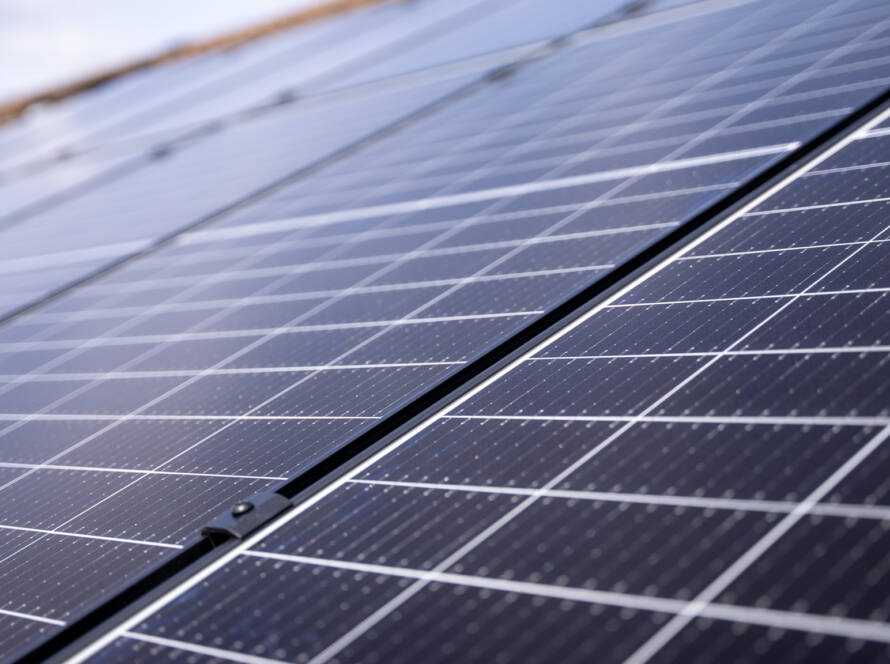
Today, solar panels are an increasingly popular choice for UK homeowners looking to reduce their reliance on fossil fuels. The latest technology allows for high efficiency rates of up to 22%, and many solar panel systems come equipped with energy storage capabilities so excess energy can be used during peak times. As the world continues to prioritize renewable energy, the future of solar panels looks bright.
While the history of solar panels dates back over 100 years, it is only in recent decades that they have become a viable option for homeowners around the world. With the increasing concern for the environment and the cost-effectiveness of solar panels, the future looks bright for this rapidly advancing technology. If you are a UK homeowner looking to reduce your carbon footprint and lower your energy bills, consider investing in solar panels – a technology that has a bright past and even brighter future.