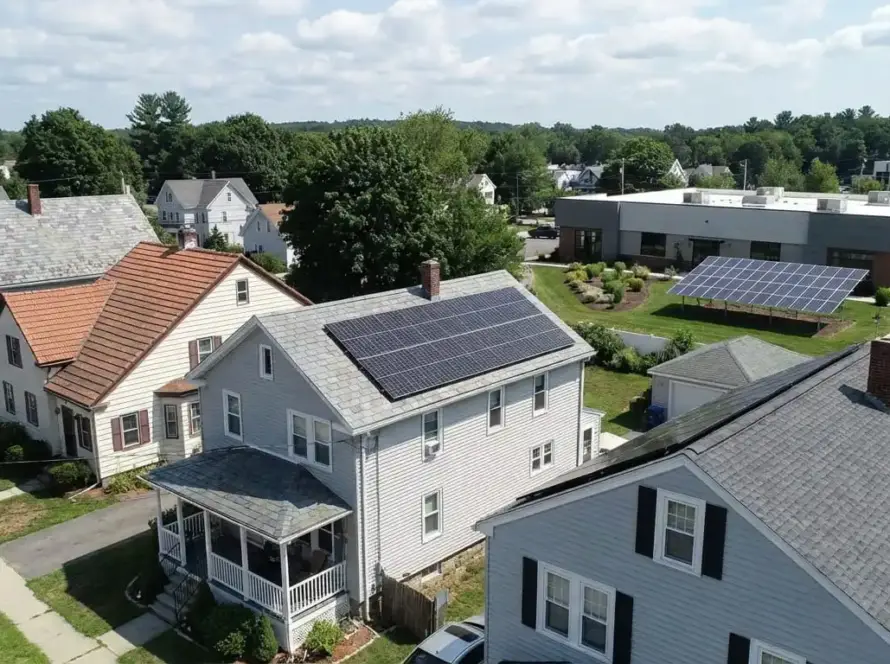
If you’ve ever seen a solar installation, you may have noticed that the solar panels are typically tilted at an angle. While it might look strange, there is actually a very good reason why this is done. Let’s take a closer look at why solar panels are typically tilted and how this can help you save money and energy.
How Tilt Angle Affects Solar Efficiency
The most important factor in determining the efficiency of a solar panel is its tilt angle—the angle at which the panel faces the sun. A higher tilt angle will result in more direct sunlight hitting the panel, thereby increasing its efficiency. This means that tilting your panels at an optimal angle can increase their efficiency by up to 25%.
If your solar panels are not tilted, they will be much less efficient than they should be. You can think of it like having a flat roof on your house; if there is no slope, rainwater won’t run off properly and it will collect on the roof instead. Similarly, if your solar panels aren’t tilted correctly, they won’t receive enough sunlight to operate efficiently.
In conclusion, tilting your solar panels at an optimal angle can significantly increase their efficiency and help you save money on energy costs over time. It’s important to note that different angles work better depending on each season so make sure to adjust accordingly throughout the year! With proper care and maintenance, your solar installation can last decades while helping you reduce electricity bills and preserve our environment!