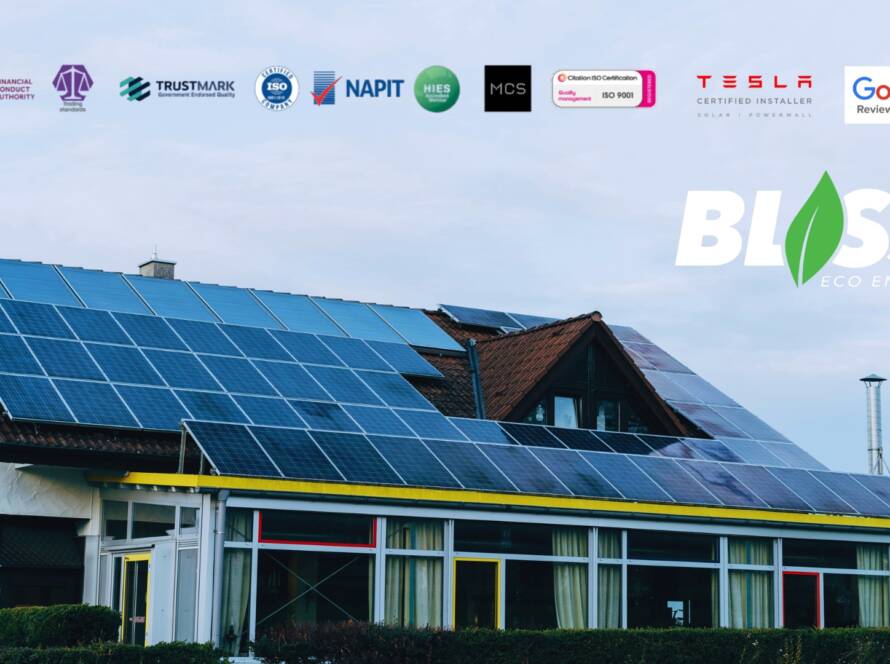
With UK energy prices continuing to rise, many homeowners are now paying significantly more each year for electricity. For residents across Essex, Bliss Eco Energy solar panel installation services provide a reliable way to reduce long-term energy costs, increase property value, and achieve energy independence.
Essex benefits from relatively strong sunlight levels compared to other parts of the UK, making it a highly suitable location for solar PV systems. Whether you own a modern home, a semi-detached property, or a rural house, solar panels can deliver consistent returns when installed correctly.
This guide explains everything you need to know—from roof suitability and panel types to costs, grants, and installation—so you can make a confident, informed decision.
Thinking about installing solar panels?
Get a free, no-obligation quote from Bliss Eco Energy’s MCS-certified solar specialists in Essex and find out how much you could save.
Typical Roof Types in Essex for Home Solar Panel Installation: A Structural Guide
Your roof plays a key role in determining system efficiency and return on investment for home solar panel installation. Bliss Eco Energy designs systems tailored to each roof type found across Essex.
| Roof Type | Suitability for Solar | Why It Works Well for Solar Panels | Key Limitations to Consider |
|---|---|---|---|
| Pitched Roofs | Excellent | Ideal angle for sunlight, simple installation, strong support | Shading from chimneys or nearby trees can reduce efficiency |
| Flat Roofs | Very Good | Panels can be angled for maximum sun exposure | Requires mounting systems, higher costs, wind resistance needed |
| Hip Roofs | Good | Multiple slopes allow sunlight capture throughout the day | Limited continuous space for larger systems |
| Slate/Tile Roofs | Good | Durable materials with a long lifespan | Installation requires care to prevent damage |
Best option: South-facing pitched roofs deliver the highest performance for home solar panel installation, but east- and west-facing systems also work efficiently in the UK.

Why a Roof Survey Matters Before Solar Panel Installation
A roof survey for solar panels ensures your property can safely support a system, identifies the optimal positioning, and prevents costly installation issues. For any home solar panel installation, this step is critical to achieving long-term efficiency and reliability.
A survey carried out by MCS-certified installers ensures your solar system is safe, efficient, and correctly designed for your property. A professional assessment is not optional—it is essential for both performance and safety.
Structural Integrity Assessment
Installers evaluate whether your roof can bear the additional weight of solar panels and mounting systems. Older roofs, particularly those over 20–30 years old, may require reinforcement or partial refurbishment before installation. Load-bearing capacity and rafter condition are key checks during a roof survey for solar panels.
Orientation and Tilt Analysis
The survey identifies the most effective panel positioning based on your roof’s orientation and pitch. South-facing roofs typically deliver the highest energy yield in the UK, but east- and west-facing systems can still perform efficiently when optimised during the home solar panel installation planning stage.
Shading Evaluation
Shading analysis is more advanced than a simple visual check. Installers often use solar pathfinder tools or software modelling to assess how shadows from trees, chimneys, neighbouring buildings, or seasonal sun angles will impact performance throughout the year.
Electrical Compatibility
Your home’s electrical system, including the consumer unit (fuse board), earthing, and available capacity, is assessed to ensure safe integration. Upgrades may be required to meet current UK wiring regulations (BS 7671).
Roof Condition and Lifespan
A survey also determines whether your roof covering (tiles, slate, membrane) is in good condition. Installing solar panels on a roof that may need repairs in a few years can lead to additional costs, as panels would need to be removed and reinstalled.
Ventilation and Heat Management
Proper airflow beneath solar panels is essential to prevent overheating, which can reduce efficiency. A survey ensures there is adequate spacing and mounting design for ventilation.
Compliance and Safety Planning
Installers check compliance with building regulations and identify any risks related to access, scaffolding, and installation safety. This ensures a smooth and legally compliant installation process.
Skipping this step can lead to reduced performance, safety issues, unexpected costs, and long-term inefficiencies.
Book a roof assessment with Bliss Eco Energy today to ensure your system is designed for maximum performance.
Monocrystalline vs Polycrystalline Solar Panels: Which Is Better for UK Homes?
Monocrystalline panels are generally better for UK homes due to higher efficiency and better performance in low-light conditions.
When comparing monocrystalline vs polycrystalline solar panels, the key difference comes down to efficiency versus cost. For most UK homeowners, especially in areas like Essex where roof space can be limited, maximising energy output per square metre is often more important than minimising upfront cost. As a result, monocrystalline panels are generally the preferred choice, offering better performance in low-light conditions and higher long-term value, while polycrystalline panels remain a practical option for larger roofs where budget is a primary concern.

Monocrystalline Panels
These are made from a single crystal structure, offering higher efficiency and a sleek black appearance.
- Efficiency: Typically 18–22%
- Best for: Homes with limited roof space
- Pros: Higher output, longer lifespan, better performance in low light
- Cons: Higher upfront cost
Polycrystalline Panels
Made from multiple silicon crystals, these panels are slightly less efficient but more affordable.
- Efficiency: Typically 15–17%
- Best for: Larger roofs with more space
- Pros: Lower cost, reliable performance
- Cons: Slightly lower efficiency, less visually uniform
Which Should You Choose?
For most Essex homeowners, Bliss Eco Energy typically recommends monocrystalline solar panels due to their higher efficiency and better performance in UK weather conditions.
Solar Panel Installation Process: Step-by-Step
Solar installation typically takes 1–3 days after design and approvals, with the full process completed in 3–6 weeks.
Step-by-Step Breakdown:
- Consultation & Energy Assessment
- Roof Survey & Site Inspection
- Custom System Design & Quote
- Planning & Grid Approval (if required)
- Installation (1–3 days)
- Testing & Commissioning
- Certification (MCS) & Grid Connection
- Monitoring Setup & Handover
Once installed, your system starts generating electricity immediately.
Save Money With Solar Installation: How Much Do Solar Panels Cut Electricity Bills in the UK?
One of the biggest motivations for going solar is reducing energy costs. But exactly how much do solar panels cut electricity bills in the UK? The answer depends on several factors, but the savings can be significant over time.
Average Savings in the UK
A typical household in Essex can save between £400 and £900 per year, depending on system size and energy usage.
Factors That Affect Savings
- System Size: Larger systems generate more electricity
- Energy Consumption: Higher daytime usage increases savings
- Electricity Rates: Rising tariffs make solar more valuable
- Battery Storage: Storing excess energy boosts savings
Exporting Excess Energy
Through schemes like the Smart Export Guarantee (SEG), you can earn money by exporting unused electricity back to the grid.
Payback Period
Most systems pay for themselves within 6 to 10 years, while panels typically last 25+ years, meaning long-term financial gain.

Solar Panel Grants in Essex: Government Funding Available in 2026
While large-scale national grants have reduced over the years, several funding options and incentives remain available in 2026, helping to make solar more affordable for homeowners in Essex. Understanding each government grant for solar panels can significantly reduce upfront costs and improve overall return on investment.
ECO4 Scheme (Energy Company Obligation)
This government-backed scheme is aimed at improving energy efficiency in low-income and vulnerable households. In some cases, it may cover part or all of the cost of solar panel installation, making it one of the most impactful options when applying for a government grant for solar panels. Eligibility depends on income level, benefits received, and property efficiency rating.
Smart Export Guarantee (SEG)
The SEG allows homeowners to earn money by exporting excess electricity back to the grid. Rates vary between energy suppliers, so it’s important to compare tariffs. Although payments are modest, they contribute to overall return on investment and improve long-term savings.
Local Council Initiatives
Some Essex councils periodically offer group-buying schemes (often called “solar bulk-buy programmes”) that negotiate lower installation costs through approved suppliers. These schemes can reduce upfront costs by 10–20% and ensure installer quality through pre-vetting.
VAT Reduction (0% VAT)
The UK government currently applies 0% VAT on residential solar panel installations, including battery storage when installed alongside panels. This significantly reduces upfront costs and is one of the most impactful financial incentives available.
Green Loans and Financing Options
Many banks and energy providers now offer “green home improvement loans” with competitive interest rates. Some installers also provide financing plans, allowing homeowners to spread the cost over several years while benefiting from immediate energy savings.
Additional Considerations
- Combining solar panels with battery storage may increase eligibility for certain funding schemes
- Energy Performance Certificate (EPC) ratings can influence grant qualification
- Availability of schemes can change, so checking current eligibility at the time of installation is essential
Speak to Bliss Eco Energy to check your eligibility for current solar incentives in Essex and find the most suitable government grant for solar panels for your property.
Planning Permission for Solar Panels in Essex: What You Need to Know
Most solar installations do not require planning permission under permitted development rules. However, understanding planning permission for solar panels is essential to ensure your installation remains fully compliant with local regulations.
When Planning Permission Is Not Required
- Panels do not protrude more than 200mm from the roof
- Installation does not exceed the highest part of the roof
- The property is not in a conservation area or a listed building
When Permission Needed
- Listed buildings
- Homes in conservation areas
- Ground-mounted systems in visible locations
Building Regulations
Even if planning permission for solar panels isn’t required, installations must still comply with building regulations, including electrical safety and structural integrity.
Bliss Eco Energy handles all compliance checks and planning guidance as part of their service.
Why Local Experience Matters for Solar Panel Installation in Essex
Choosing local solar installers like Bliss Eco Energy ensures better performance, compliance, and long-term reliability. Working with local solar installers improves both system efficiency and overall project experience.

Knowledge of Local Properties
Local solar installers have hands-on experience with the wide range of property types found across Essex, from modern new-build estates to period homes with slate or clay tile roofs. They understand structural nuances such as roof pitch, rafter spacing, and typical load-bearing capacity, allowing them to recommend systems that fit safely and efficiently without unnecessary modifications.
Familiarity With Local Regulations
Every local authority can interpret planning guidelines slightly differently. An Essex-based installer is familiar with council-specific requirements, conservation area restrictions, and permitted development rules. This reduces the risk of delays, rejected applications, or non-compliant installations.
Faster Site Assessments and Installation
Being locally based means quicker response times for site surveys, installation scheduling, and inspections. This is especially valuable if you’re working within a tight timeline or want to secure installation before seasonal demand increases.
Understanding of Local Weather and Solar Conditions
Essex benefits from relatively strong sunlight levels compared to other parts of the UK, but local factors such as coastal weather patterns, wind exposure, and seasonal variation still matter. Local installers can design systems that optimise panel angle, positioning, and durability based on these regional conditions.
Tailored System Design
Rather than using a one-size-fits-all approach, local providers can design systems that reflect your property layout, energy usage habits, and surrounding environment. This includes accounting for shading from nearby buildings, typical roof orientations in your area, and future scalability, such as battery storage.
Established Local Supply Chains
Local solar installers often have established relationships with trusted suppliers and scaffolding teams. This helps streamline the installation process, reduce delays, and ensure consistent quality across every stage of the project.
Ongoing Support and Maintenance
Post-installation support is significantly more reliable with a nearby installer. Whether it’s system monitoring, maintenance, or fault resolution, local companies can respond quickly without long waiting times. This ensures your system continues to operate at peak efficiency over its lifespan.
Reputation and Accountability
Local businesses rely heavily on word-of-mouth and regional reputation. This often results in higher service standards, transparent communication, and a stronger commitment to customer satisfaction. You can also verify their work through local reviews and completed projects in your area.
Local expertise ensures your system is designed for maximum efficiency in real UK conditions.
Questions to Ask Before You Install Solar Panel Systems
Before committing to a solar installation, asking the right questions can save you time, money, and potential issues. Each question about solar system design and installation helps ensure you make an informed decision.
About the System
- What system size is recommended for my home?
- How much energy will it generate annually?
- Will I need battery storage?
About the Installation
- How long will the installation take?
- Will my roof require reinforcement?
- What warranties are included?
About Costs and Savings
- What is the total installation cost?
- What savings can I realistically expect?
- Are there financing options available?
About Maintenance
- How often do panels need cleaning?
- What happens if a panel fails?
- Is monitoring included?
About the Installer
- Are you certified and accredited?
- Can you provide local case studies or references?
- Do you handle planning permissions if required?
Conclusion
Solar panel installation in Essex is a practical, forward-thinking investment that delivers both financial and environmental benefits. With the right system design, proper roof assessment, and a knowledgeable local installer, homeowners can significantly reduce energy bills while contributing to a cleaner future.
From understanding roof suitability and choosing between panel types to navigating grants and planning regulations, every step plays a role in maximising your return on investment. As energy prices continue to rise, the case for solar becomes even stronger.
If you’re considering making the switch, now is an ideal time to explore your options and take control of your energy future.
Frequently Asked Questions
How long do solar panels last in the UK?
Answer: Most solar panels last 25 to 30 years, with minimal performance degradation over time.
Do solar panels work on cloudy days?
Answer: Yes, solar panels still generate electricity in cloudy conditions, although output is reduced compared to sunny days.
Is Essex a good location for solar panels?
Answer: Yes, Essex receives a relatively high level of sunlight for the UK, making it well-suited for solar energy generation.
Can I install solar panels on a flat roof?
Answer: Yes, but they require angled mounting systems to achieve optimal performance.
Do I need battery storage?
Answer: Battery storage is optional but beneficial if you want to store excess energy and increase savings.
How long does installation take?
Answer: Most residential installations are completed within 1 to 3 days, depending on system size and complexity.
Will solar panels increase my property value?
Answer: Yes, energy-efficient homes with solar systems are often more attractive to buyers and can command higher prices.
What maintenance do solar panels require?
Answer: Minimal maintenance is needed, mainly occasional cleaning and system checks to ensure optimal performance.