The most efficient way to run an air source heat pump in the UK climate is to operate it steadily at low flow temperatures, match it to a well-insulated home, and set controls that reflect how UK weather actually behaves. This guide explains how air source heat pumps perform in real UK conditions, why running costs vary so much between homes, and what practical factors make the biggest difference to efficiency. It focuses on how these systems work day to day, not on sales claims or theory.
Understanding efficiency in the UK climate
Air source heat pumps work best when they provide slow, consistent heat rather than short bursts of high output. The UK climate, with long heating seasons and moderate winter temperatures, suits this operating style well. Problems usually arise when systems are installed or run like traditional boilers.
Efficiency is measured by how much heat the system produces compared to the electricity it uses. In practice, this depends less on the heat pump unit itself and more on how it is sized, set up, and used in a real home.
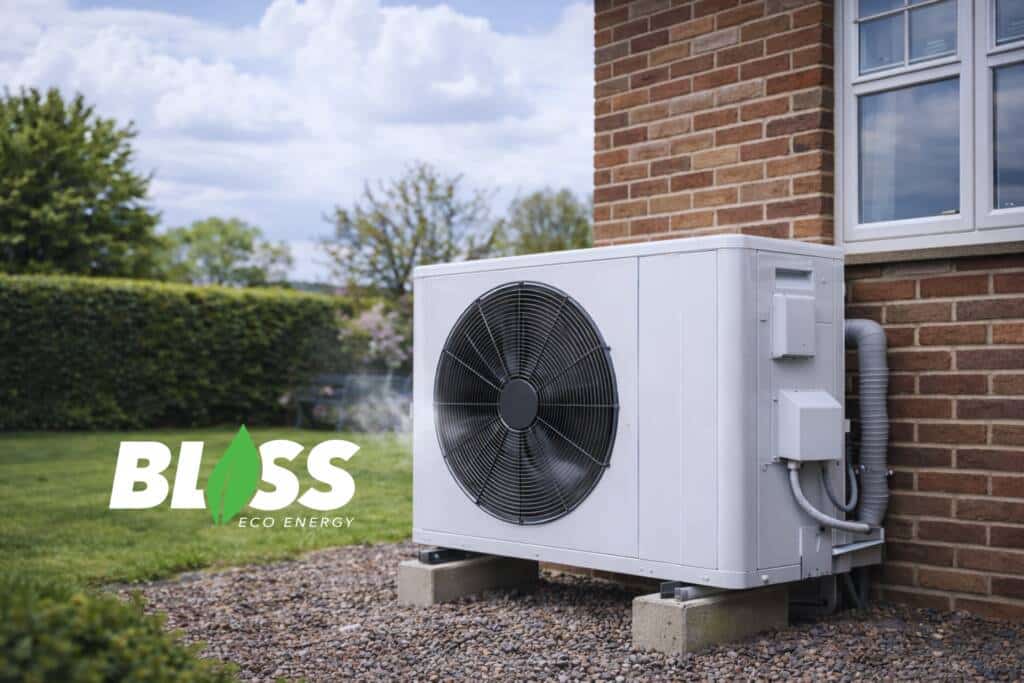
Why steady, low-temperature heating matters
The single biggest factor in efficiency is flow temperature. Heat pumps perform best when supplying heat at lower temperatures over longer periods.
In UK homes, this usually means:
- Running the system for longer hours at a stable setting
- Keeping indoor temperatures consistent rather than switching on and off
- Allowing the heat pump to respond gradually to outdoor temperature changes
Trying to heat a cold house quickly pushes the system into less efficient operation and raises running costs.
Insulation and heat demand come first
No control setting can compensate for high heat loss. The most efficient way to run an air source heat pump always starts with the building itself.
Homes with:
- Solid wall insulation
- Loft insulation
- Reduced draughts
- Modern glazing
require less heat overall, allowing the heat pump to operate at lower output for longer periods. This directly improves efficiency and lowers electricity use.
In poorly insulated homes, the heat pump has to work harder to maintain the temperature, which explains why some users report high running costs.
Air-to-air vs air-to-water systems
An air to air source heat pump heats the home by blowing warm air directly into rooms. This differs from air-to-water systems, which heat radiators or underfloor heating.
Air to air source heat pumps:
- Respond quickly to temperature changes
- Avoid losses through pipework and radiators
- Work well in open-plan or lightly occupied homes
However, they rely on air circulation and may not suit every layout. Air to air source heat pumps reviews often highlight lower installation complexity but note limitations for whole-home hot water.
Efficiency depends on matching the system type to how the home is used, not on the technology alone.
Control settings that support efficient running
Efficient operation depends on allowing the system to manage heat smoothly.
Key principles include:
- Avoiding frequent manual temperature changes
- Using weather-responsive controls where available
- Keeping thermostat settings realistic rather than high
In UK conditions, small adjustments maintained over time are more effective than large daily swings.
Why air source heat pumps can feel expensive to run
Many people ask: are air source heat pumps expensive to run? The answer depends on how they are operated.
Common reasons for higher costs include:
- High flow temperatures set to mimic a boiler
- Undersized systems working at full output
- Poor insulation increasing heat demand
- Incorrect use of backup heaters
When these issues are present, users often ask why is my air source heat pump expensive to run. In most cases, the cause is operational rather than a fault with the unit.
Installation quality and system design
How to install an air source heat pump correctly matters more than the brand or model. Proper design ensures the system matches the heat demand of the property.
Good installation includes:
- Accurate heat loss calculations
- Correct emitter sizing
- Thoughtful placement of outdoor units
- Controls configured for continuous operation
Mistakes at this stage are difficult to fix later and often lead to long-term efficiency problems.
Seasonal performance in real UK conditions
In the UK climate, air source heat pumps spend much of the year operating in mild temperatures where they perform very efficiently. Cold snaps reduce efficiency temporarily, but steady operation helps limit the impact.
Homes that allow the system to run consistently through winter usually see lower annual costs than those that try to control it like a conventional heating system.
Suitability for different households
Air source heat pumps fit best in homes that:
- Are occupied for long periods
- Prefer stable indoor temperatures
- Have reasonable insulation levels
They may be less suitable for properties that rely on short, intense heating periods or have high uncontrolled heat loss.
Frequently Asked Questions
Q1: Are air source heat pumps expensive to run?
Ans: They are not inherently expensive to run. High costs usually come from poor insulation, high temperature settings, or incorrect system design.
Q2: What is the most efficient way to run an air source heat pump?
Ans: Running it steadily at low temperatures with minimal on-off cycling delivers the best efficiency in UK homes.
Q3: Why is my air source heat pump expensive to run?
Ans: Common causes include high flow temperatures, undersized systems, and homes with high heat loss.
Q4: Do air to air source heat pumps work well in the UK?
Ans: Yes, they can work well, especially in open or well-insulated homes, but they are not suitable for every layout.
Q5: How does installation affect efficiency?
Ans: Correct installation ensures the system matches the home’s heat demand, which has a direct impact on running costs.
Q6: Can heat pumps cope with UK winters?
Ans: They can, provided they are sized correctly and allowed to run continuously during colder periods.
Q7: Is switching the system off at night efficient?
Ans: Usually not. Maintaining a steady temperature is more efficient than reheating a cold home.