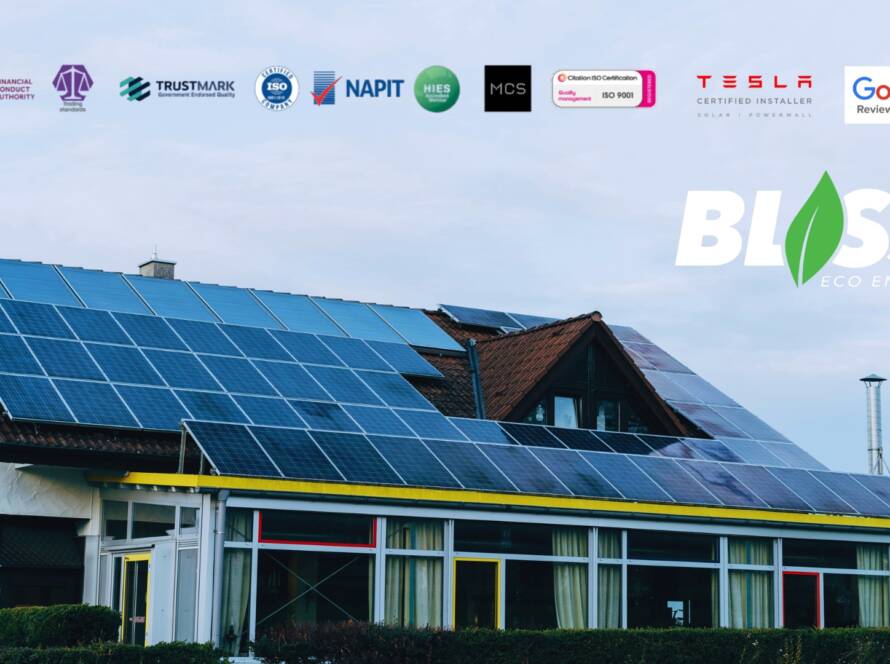
No, solar panels don’t make electricity at night. They need sunlight to work. But your home can still use solar power after dark. This happens with battery storage or smart export tariffs. The right system design keeps your home powered 24/7.
How Solar Panels Actually Work
Solar panels turn sunlight into electricity using photovoltaic (PV) cells. These cells generate direct current (DC) power. An inverter then changes it to alternating current (AC) for your home.
Modern systems use micro-inverters for better performance. They help when part of your roof has shade. Even on cloudy days, panels still make energy from daylight.
At night, panels stop generating because there is no sunlight. But your home can stay powered with stored energy or imported electricity from the grid.
What Powers Your Home After Dark
1. Battery Storage: Use Your Daytime Solar at Night
Battery storage is the best way to use solar power at night. During the day, your system charges the battery. When the sun sets, it releases that stored energy back to your home.
You can power lights, TVs, fridges, and even EV chargers. A battery also gives backup power during short blackouts. Most homes use between 5 to 10 kWh of energy each night. That matches the size of most home batteries.
Batteries can work with new or existing solar systems. They help you use more of your own clean energy instead of buying from the grid.
2. Export Tariffs and Smart Import
Not everyone needs a battery right away. You can send extra solar power to the grid during the day. In return, you earn money through an export tariff.
When night comes, you repurchase power at the standard rate. This balances your costs over time. With a smart meter, you can track this in real time.
3. Hybrid Approach: Battery + Export
Many homes use both methods. This gives the best flexibility and savings. You use stored energy first, then export or import as needed. It’s ideal for families with higher evening energy use.
Quick Comparison: Solar Options for Night Power
| Option | Main Benefit | Drawback | Best For |
|---|---|---|---|
| Battery Only | Lets you use your own stored energy at night. | Higher upfront cost for the battery. | Homes with high evening energy use. |
| Export Only | Earn money for the power you send to the grid. | You still buy energy at night. | Smaller systems or homes with daytime use. |
| Hybrid System | Combines battery and export for best savings. | Medium setup cost. | Most family homes in the UK. |
Tip: A hybrid system is the most flexible choice. It reduces grid use and increases savings. Many UK homeowners prefer it because it works in every season.
Does Weather or Roof Type Matter?
The weather affects how much power your panels make in the day. But at night, it doesn’t matter because generation stops. What matters is how much energy your system stores or exports.
In winter, short days mean less sunlight. That’s when battery size becomes more important. A bigger battery can keep your home running longer through dark evenings.
Flat roofs or shaded areas are not a problem either. Micro-inverter technology helps get the best power even with tricky roof shapes.
In Essex, most homes get 3 to 5 hours of sunlight per day in winter. This is still enough to charge a battery for evening use.
Real Savings and Payback
Even though solar panels don’t work at night, the savings are real. You generate free energy during the day and use it when rates are highest.
Most homeowners in the UK see energy bills cut by 60–70%. Payback usually happens in 6–10 years, depending on usage and system size.
Battery systems increase those savings by shifting energy to when you need it most. Apps let you see generation, usage, and export in real time. This helps you understand your return on investment.
Common Myths About Solar at Night
Myth 1: Solar panels are useless at night: Not true. You can still use solar power stored in batteries.
Myth 2: Solar doesn’t work in the UK: False. Solar panels make energy from daylight, not heat. Even on cloudy days, they work well.
Myth 3: Batteries are only for power cuts: Wrong. Batteries help you save money every night by reducing grid use.
What Size Battery Do You Need?
Since solar panels don’t produce electricity at night, a solar battery helps keep your home running. The right battery size depends on how much power you use after sunset. Every home is different, so your energy habits matter most.
Typical Energy Use
- Small flats: 3–4 kWh per night
- Average homes: 6–8 kWh per night
- Large homes: 8–12 kWh per night
If you cook, use heating, or charge an EV at night, you’ll need a larger battery.
When to Choose a Bigger Battery
Pick a higher capacity if you:
- Charge an electric vehicle overnight
- Use electric heating or hot-water tanks
- Have multiple evening appliances running together
Most UK families choose 10 kWh batteries. This size covers lighting, internet, and essentials through the night and offers flexibility during winter.
Smart Sizing Tips
If you’re on a budget, start with a 5 kWh system. It runs key loads and can be expanded later. Installers size your battery using:
- Your energy bills or smart-meter data
- Your roof size and solar capacity
- Plans like EVs or heat pumps
A slightly larger system (10–20 % more) keeps you ready for growth.
Recommended Range
For most UK homes, a 10–12 kWh battery gives reliable night coverage, lower bills, and excellent long-term value.
Quick Checklist: Getting Night-Ready Solar in Essex
- Check how much power you use after sunset.
- Review your roof for sunlight and shading.
- Choose high-efficiency panels with micro-inverters.
- Add the right-sized battery for your needs.
- Ask about export tariffs and smart meters.
- Pick an MCS-certified installer with great reviews.
Why Essex Homeowners Choose Bliss Eco Energy
At Bliss Eco Energy, we help families and businesses across Essex make the switch to clean power. We install premium solar panel systems with advanced micro-inverter technology. Our team designs each system to fit your roof and energy needs.
We’ve completed hundreds of installations across Southend-on-Sea, Chelmsford, Basildon, Colchester, Brentwood, Castle Point, and Harlow. Our customers rate us 5 stars for quality and service.
Our experts are MCS-certified and accredited by NAPIT, HIES, TrustMark, and Enphase. You can trust us to deliver reliable, efficient, and long-lasting systems.
Power Your Home or Business with Clean Energy
Even though solar panels don’t work at night, your home can stay powered using stored solar energy.
Bliss Eco Energy offers complete solar panel installations for homes and businesses across Essex. We help you save money, gain independence, and protect the planet.
📞 Call us on +44 1702 933388 📧
Email: info@bliss-ecoenergy.com
Or visit our Solar Panel Installation page for a free, no-obligation quote.
Join hundreds of happy customers who already enjoy lower bills and cleaner energy with Bliss Eco Energy—your local solar experts in Essex.
People Also Ask (FAQs)
Q. Do solar panels work on cloudy days or at night?
A. They work on cloudy days but not at night. Cloudy weather reduces power output, but daylight still generates energy.
Q. How much battery do I need to run my house at night?
A. Many homes need between 4–8 kWh for overnight use. Larger homes or EV users may need more.
Q. Can solar panels power my home during a power cut?
A. Only if you have a battery with backup support, standard systems turn off for safety during outages.
Q. Can I add a battery to an existing system?
A. Yes. Most modern systems allow battery retrofitting without significant changes.