With over 10 years of experience analysing UK solar installations across residential and commercial buildings, I’ve reviewed how property type directly affects system performance and return on investment. In Chelmsford, solar panels work best on properties with suitable roof space, strong daytime energy use, and minimal shading—but the “best” property depends on how energy is consumed.
Answer: The best properties for solar panels in Chelmsford are owner-occupied homes and commercial buildings with south-facing (or near south-facing) roofs, consistent energy demand, and long-term occupancy plans.

What makes a property suitable for solar panels in Chelmsford?
A suitable property combines physical roof conditions with the right energy usage profile.
At a minimum, strong candidates have:
Unshaded roof space for most of the day
Structural integrity to support panels
Predictable energy use patterns
No short-term plans to sell or redevelop
Key takeaway: Solar works best where electricity is used on-site during daylight hours.
Are residential homes good candidates for solar panels?
Yes—most residential properties in Chelmsford are well suited to solar panels, especially family homes.
Ideal residential characteristics
Detached or semi-detached houses
Pitched roofs with south, southeast, or southwest orientation
Daytime electricity use (home working, EV charging, appliances)
Residential solar panel systems are typically sized to reduce bills rather than generate income. Homes with higher daytime usage see the fastest payback.
Key takeaway: Residential solar performs best when households actively use electricity during the day.
Which residential properties are less suitable for solar panels?
Not all homes are ideal, even if solar is technically possible.
Less suitable properties include:
Heavily shaded homes (trees or nearby buildings)
North-facing roofs without alternative roof sections
Leasehold flats without roof rights
Properties with planned roof replacement in the near term
These homes may still use solar, but efficiency and ROI are often lower.
What makes a property suitable for solar panels in Chelmsford?
A suitable property combines physical roof conditions with the right energy usage profile.
At a minimum, strong candidates have:
Unshaded roof space for most of the day
Structural integrity to support panels
Predictable energy use patterns
No short-term plans to sell or redevelop
Key takeaway: Solar works best where electricity is used on-site during daylight hours.
Are commercial buildings better for solar panels than homes?
Yes—commercial properties often achieve higher returns than residential ones.
Why commercial solar panels perform well
Higher and more consistent daytime electricity demand
Larger roof areas for system expansion
Ability to offset expensive peak-time energy use
Commercial solar panel systems are particularly effective for:
Offices
Warehouses
Retail units
Schools and care facilities
Key takeaway: Commercial solar delivers stronger long-term savings because energy is used while it’s generated.
What roof types work best for solar panels?
Roof type directly impacts installation complexity and system output.
Best-performing roof types
Pitched tile or slate roofs
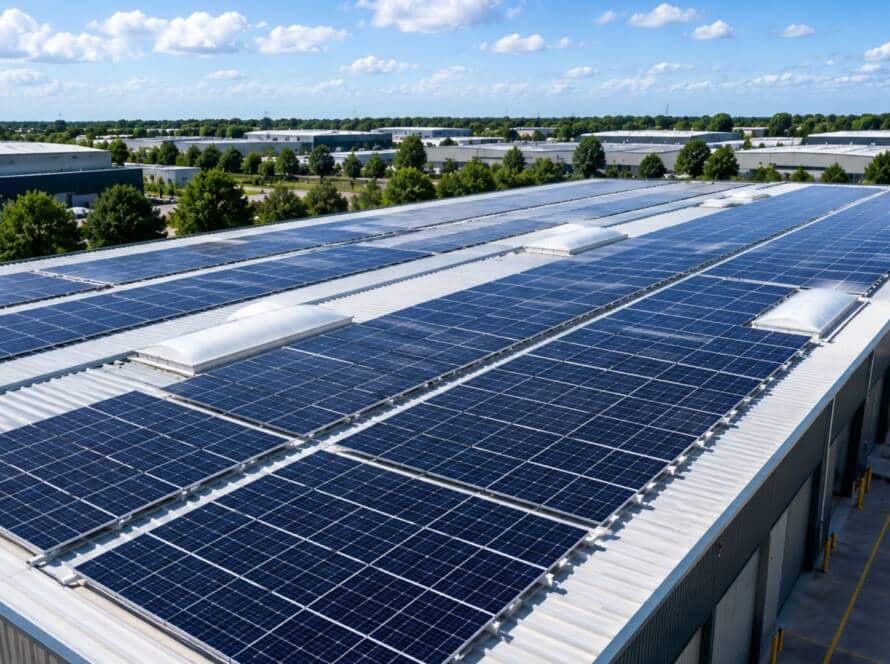
Metal sheet roofs (common on commercial buildings)
Flat roofs with ballasted mounting systems
Flat roofs are especially useful for commercial properties because panels can be angled optimally, improving output even when orientation isn’t ideal.
What makes a property suitable for solar panels in Chelmsford?
A suitable property combines physical roof conditions with the right energy usage profile.
At a minimum, strong candidates have:
Unshaded roof space for most of the day
Structural integrity to support panels
Predictable energy use patterns
No short-term plans to sell or redevelop
Key takeaway: Solar works best where electricity is used on-site during daylight hours.
Does property ownership matter for installing solar panels?
Yes—ownership structure is critical.
Solar panels are best suited to:
Freehold homeowners
Owner-occupied commercial properties
Long-term leaseholders with written landlord consent
Short leases, uncertain tenancy, or pending redevelopment often make solar financially impractical.
Are older properties in Chelmsford suitable for solar panels?
Many older properties are suitable, but structural checks are essential.
Before installation, older homes should be assessed for:
Roof load capacity
Wiring upgrades
Fuse board compatibility
Age alone does not disqualify a property, but it may increase preparation costs.
Residential vs commercial solar panels: which should you choose?
The choice depends on energy use, not just property type.
| Factor | Residential solar panel | Commercial solar panel |
|---|---|---|
| System size | Smaller (3–6 kW) | Larger (10 kW+) |
| Usage pattern | Mixed day/night | Mostly daytime |
| ROI speed | Moderate | Faster |
| Complexity | Lower | Higher |
Key takeaway: Choose system type based on how and when electricity is consumed.
What makes a property suitable for solar panels in Chelmsford?
A suitable property combines physical roof conditions with the right energy usage profile.
At a minimum, strong candidates have:
Unshaded roof space for most of the day
Structural integrity to support panels
Predictable energy use patterns
No short-term plans to sell or redevelop
Key takeaway: Solar works best where electricity is used on-site during daylight hours.
Frequently Asked Questions
Can terraced houses in Chelmsford install solar panels?
Yes, provided there is sufficient unshaded roof space and suitable orientation.
Are solar panels worth it for small businesses?
Yes. Small commercial properties often see strong savings if they operate mainly during daytime hours.
Do flat-roof properties work well with solar panels?
Yes. Flat roofs can be excellent because panels can be angled for optimal sunlight exposure.