What peak shaving actually is, how it differs from load shifting, and how both drive real demand charge reduction for UK commercial sites.
Peak shaving is what happens when a business reduces its maximum electricity demand at the specific moments that determine its network charges — typically by discharging a battery, running on-site generation, or briefly cutting non-essential load during those windows. For UK businesses, it directly targets the charges that are calculated from your peak demand rather than your total consumption: DUoS red band charges, your contracted capacity (kVA/MIC) banding, and — to a reduced but still relevant extent since 2023’s charging reforms — TNUoS Triad exposure. Because these charges are based on the single highest point of demand rather than how much electricity you use overall, shaving even a modest amount off your peak can produce savings that are completely disproportionate to the effort involved.
Most conversations about cutting a business’s electricity bill focus on using less power overall. Peak shaving is different — it’s not about total consumption at all, but about the single highest moment of demand your site records. That distinction matters, because a large chunk of what businesses pay for network access is calculated from that one peak, not from the electricity used across the rest of the year.
This guide explains what peak shaving actually is, how it differs from the closely related idea of load shifting, which specific charges it targets, and how businesses put it into practice — often using the same battery storage system that’s already paying for itself through solar self-consumption.
Because so many network charges are set by your single worst half-hour, not your annual total, shaving even 10–15% off your peak demand can produce a saving that looks completely out of proportion to the change. This is what makes peak shaving one of the highest-leverage actions a commercial energy user can take, and why it’s increasingly the main financial case for battery storage on sites that already have solar.
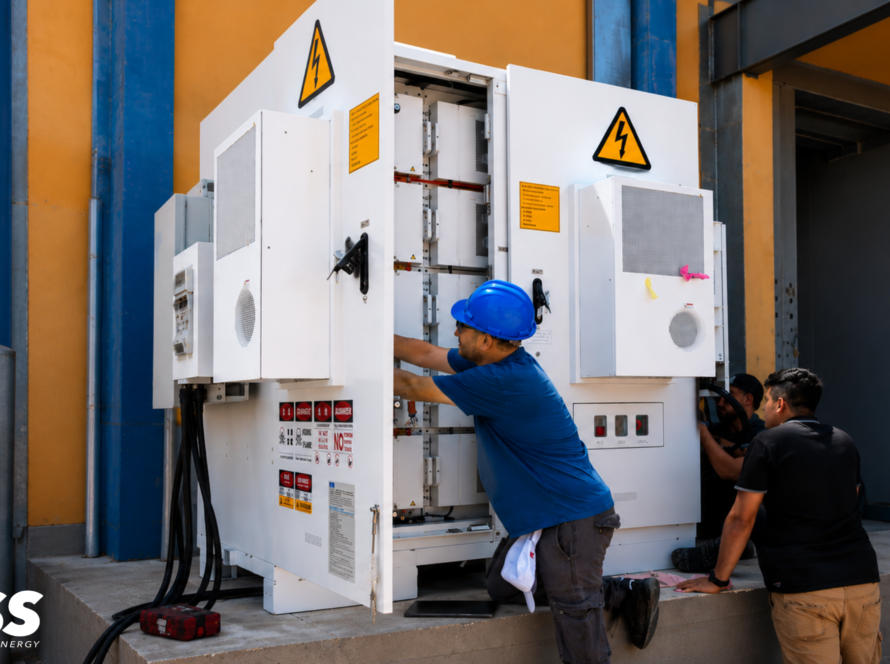
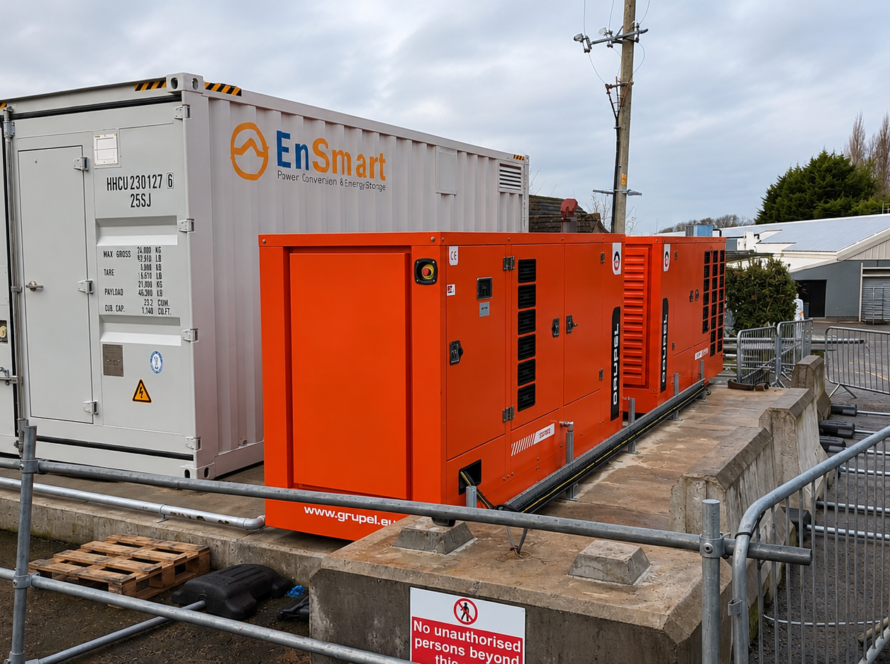
Peak shaving means reducing the maximum amount of electricity a business draws from the grid at its highest-demand moments, rather than reducing electricity use across the board. In practice, this usually means discharging a battery, switching to on-site generation, or briefly powering down non-critical equipment for a short window — often just a few minutes to a couple of hours — precisely when demand would otherwise spike.
The reason this is worth doing at all comes down to how UK network charges are structured. A meaningful share of what a half-hourly metered business pays isn’t based on total kWh consumed, but on the single highest half-hourly demand period recorded, or on a contracted capacity band set in advance. Shave that peak, and you reduce the charge — even if your total annual consumption doesn’t change at all.
Any business consuming above certain thresholds is required to be on half-hourly (HH) metering in Great Britain, which is what makes peak-based charges visible and actionable in the first place. If you’re not sure whether your site is HH-metered, your supplier or broker can confirm.
The two terms get used almost interchangeably, but they describe different strategies with different goals — and in practice, most businesses end up doing some of both.
Peak shaving specifically lowers the maximum demand your site records, using a battery, generator or brief load reduction at the exact moment demand would otherwise spike. It doesn’t necessarily change when or how much electricity you use overall — it just flattens the very top of the demand curve. This is what directly reduces capacity-based charges and Triad-influenced costs.
Load shifting means rescheduling when electricity is used — running a process at 2am instead of 5pm, for example — to take advantage of cheaper time-of-use rates and lower DUoS bands. Unlike peak shaving, load shifting doesn’t necessarily reduce your maximum demand; it just relocates consumption to a less expensive window.
Peak shaving works because several distinct charges on a commercial electricity bill are calculated from peak demand rather than total consumption. Understanding which ones apply to your site is the difference between a rough estimate and a genuinely accurate savings case.
| Charge | How it’s calculated | Effect of peak shaving |
|---|---|---|
| DUoS red band | Highest per-unit rate during weekday peak hours | Directly reduced by cutting demand in that window |
| Contracted capacity (kVA/MIC) | Fixed charge based on your agreed maximum import capacity | Can allow a lower capacity band, cutting the standing charge |
| TNUoS Triad exposure | Historically based on demand during three winter peak periods | Reduced impact since 2023 reforms, but not eliminated for all sites |
| Total energy consumption (kWh) | Based on total electricity used, regardless of timing | Not directly affected by peak shaving alone |
Before 2023, some businesses could meaningfully cut their TNUoS bill by avoiding consumption during the three winter Triad periods. Reforms to the transmission charging framework have shifted much of TNUoS onto a fixed, banded charge tied to your contracted capacity rather than actual peak consumption, which has reduced — though not entirely removed — the value of chasing Triad avoidance specifically. DUoS red band and capacity charges are now the more reliable targets for peak shaving.
For a fuller breakdown of how DUoS red band charges work and why they’re often the most expensive few hours on a bill, see our guide on DUoS red band pricing.
Peak shaving ranges from simple operational discipline to fully automated battery dispatch. Most commercial sites use a combination of the following.
Take a mid-sized manufacturing site with a recorded peak demand of 500kW, using a battery to shave 100kW (20%) off that peak during known high-cost windows.
| Item | Estimate |
|---|---|
| Recorded peak demand before peak shaving | 500 kW |
| Peak shaved by battery discharge | 100 kW (20%) |
| New recorded peak demand | 400 kW |
| Effect on capacity-based charges | Potential to drop a contracted capacity band |
| Effect on DUoS red band exposure | Reduced import during the most expensive hours |
| Illustrative combined annual saving | ~£5,000–£30,000, site-dependent |
The exact figure depends heavily on your site’s specific tariff structure, DNO region and contracted capacity — which is exactly why a site-specific assessment gives a far more accurate number than any generic average.
Peak shaving works best when it’s built on real data rather than a rule of thumb, and battery storage is by far the most reliable way to deliver it consistently, since discharge timing can be automated against known peak windows rather than relying on manual intervention.
- Get your half-hourly demand data and identify your actual recorded peaks over the past 12 months
- Confirm your DNO’s exact DUoS red band hours and your current contracted capacity band
- Size a battery system around your realistic peak reduction potential, not just total solar surplus
- Automate discharge timing against known peak windows rather than relying on manual switching
- Review your capacity band annually as your peak-shaving results change your actual demand profile
For businesses in Essex, we design commercial solar battery storage in Essex systems specifically around this kind of peak-shaving analysis, rather than sizing purely for self-consumption.
- Half-hourly metered, or consuming enough to qualify
- Recorded peak demand data available for the last 12 months
- Visibility into your DNO’s DUoS band hours and your capacity charge
- Clear, identifiable peaks rather than flat, consistent demand
- Some flexibility in equipment or process timing, even briefly
- Existing or planned solar generation to charge a battery cheaply
- Site-specific peak-shaving assessment booked rather than relying on generic averages
- Battery sizing based on actual peak reduction potential
- Capacity band reviewed annually as results change your demand profile
- Peak shaving reduces your maximum demand, not your total consumption — and that’s exactly what many network charges are based on.
- It’s distinct from load shifting, which moves consumption to cheaper times rather than flattening the peak — most systems do both.
- It primarily targets DUoS red band charges and contracted capacity bands; TNUoS Triad avoidance matters less than it did before 2023.
- Battery storage automates peak shaving reliably, discharging against known peak windows rather than relying on manual intervention.
- Because peak-based charges scale from a single worst half-hour, even modest peak reduction can produce disproportionate savings.
Want to know your peak-shaving potential?
We’ll review your half-hourly demand data and tariff structure to show exactly what peak shaving could save your business.